Problem
5 hours and 36 minutes – the average time Polish teenagers spend online on weekdays. That’s 2 hours more than 8 years ago. Up to 70% of children in Europe have posture defects Posture disorders in children are the result of negative lifestyle changes in both children and their parents, related to, among other things:

- 70% of children in Europe have posture defects
- 70% of Europeans have malocclusion
- 15% of children take painkillers for headaches and neck pain
- Over 70% of adults and 23% of children in Europe experience headaches of unknown cause
- 40% of children with chronic headaches are found to have medication-overuse headaches
- 20% of children suffer from eye strain or computer vision syndrome, manifested by dry and irritated eyes, blurred vision, headaches, fatigue, and neck and back pain.
System SpinHeadSet
SpinHeadSet Home
Our goal is to improve posture while working at a computer, reduce the negative effects of prolonged sitting, and increase patient awareness of therapy and the nature of the problem.
That is why we created the SpinHeadSet Home system. Our solution allows therapy to be conducted at home, at any time and in comfortable conditions, which significantly increases the regularity and effectiveness of the exercises. This makes it possible to support treatment on a daily basis without the need for frequent visits to specialists. The device simultaneously records head and jaw movements, allowing for precise analysis of their interrelationships. Using motion sensors, biofeedback, and artificial intelligence algorithms, the system continuously analyzes the collected data, detecting abnormalities in the functioning of the musculoskeletal system and masticatory organs.
SpinHeadSet Home combines advanced biomechanical technology, artificial intelligence, and elements of virtual therapy. This makes the therapy not only effective but also engaging – the patient exercises in the form of interactive tasks and therapeutic games designed by a team of physiotherapists, speech therapists, and osteopaths. SpinHeadSet Home is a modern home rehabilitation system with applications in:
1. Physiotherapy
2. Dental prosthetics (bite reconstruction)
3. Orthodontics
4. Sports medicine
We have 15 years of experience in rehabilitation – our system was created in response to the needs of doctors and their patients.
SpinHeadSet Home consists of:
- a tablet with a camera
- “glasses”
- a set of therapeutic tasks
SpinHeadSet Pro
SpinHeadSet Pro is a diagnostic version designed for specialist clinics and therapy centers. It is equipped with advanced biomechanical analysis functions, automatic report generation, therapy progress tracking, and tools to support clinical decision-making. It enables precise selection of a therapy plan and strict control of its effects. Our tool allows for accurate collection of data on head and jaw movements simultaneously. It is the first such system to record the movements of these two areas in real time, helping to understand how posture affects bite and vice versa. We collect more than just basic data. We create a unique movement pattern that shows how body posture is related to bite. These new measurements are a breakthrough in diagnostics, previously unattainable, and form the basis for developing treatment models for patients with posture and bite problems.
Who is SpinHeadSet Home designed for?
SpinHeadSet Home is a solution designed for patients with various functional problems that cannot be effectively solved by dental work or simple posture correction alone. The device is intended for people who need a comprehensive approach based on a combination of diagnostics, therapy, and regular monitoring of results.

Diagnostic process
Standard treatment process
Our proposal
A child with headaches, neck pain, malocclusion, and poor posture visits an orthodontist or physical therapist
Diagnosis of the problem, e.g., crooked teeth, poor posture, tension headaches
Implementation of treatment – orthodontic braces and exercises with a physiotherapist, as well as recommendations for exercises at home.
Home exercises tailored to cognitive abilities with ongoing feedback on their correct performance – a tool to support therapy – changing habits.
Effect of therapy
One visit per week to a physiotherapist.
<
Exercises 7 times a week for 7 minutes
Our many years of experience show that short but regular exercises – just 7 minutes a day – bring better therapeutic results and help to develop lasting, positive habits than sporadic meetings with a therapist.
Benefits
Why is it important to maintain correct head posture?
Correct head posture relieves tension in the neck, shoulder, and back muscles, which significantly reduces the frequency and intensity of headaches. In children, whose headaches are often accompanied by poor posture, regular exercise and conscious posture correction can lead to their complete disappearance. In addition, the reduction of tension leads to improved well-being and lower stress levels.

Correct posture and proper muscle tension support the durability of orthodontic and prosthetic treatment, eliminating additional forces that can interfere with the effects of therapy.
KPosture correction improves visual ergonomics – it minimizes eye strain during study or computer work. At the same time, open airways promote deeper, calmer breathing, which improves concentration and overall well-being.

Developing correct postural patterns at a young age is much faster and more effective. This gives children healthy habits that will serve them well for many years to come.
Early posture correction prevents future spinal disorders such as scoliosis or cervical and thoracic overload. It is an investment in future health.

The system provides accurate real-time data on head position, which facilitates monitoring of therapy effects and allows for quick adjustment of the exercise program.
Objective data on habitual head position helps dentists and physical therapists to precisely plan bite restoration, orthodontic or prosthetic treatment. This makes cooperation between specialists more effective and treatment better tailored to the individual needs of the patient.
Research and publications
The difference between habitual and reference positions
The reference position is the position of the head and cervical spine in which optimal stability and mobility are achieved, requiring minimal muscular effort to balance the forces acting in this area of the human body. The habitual position is the position that the body assumes as a result of unfavorable biomechanical conditions.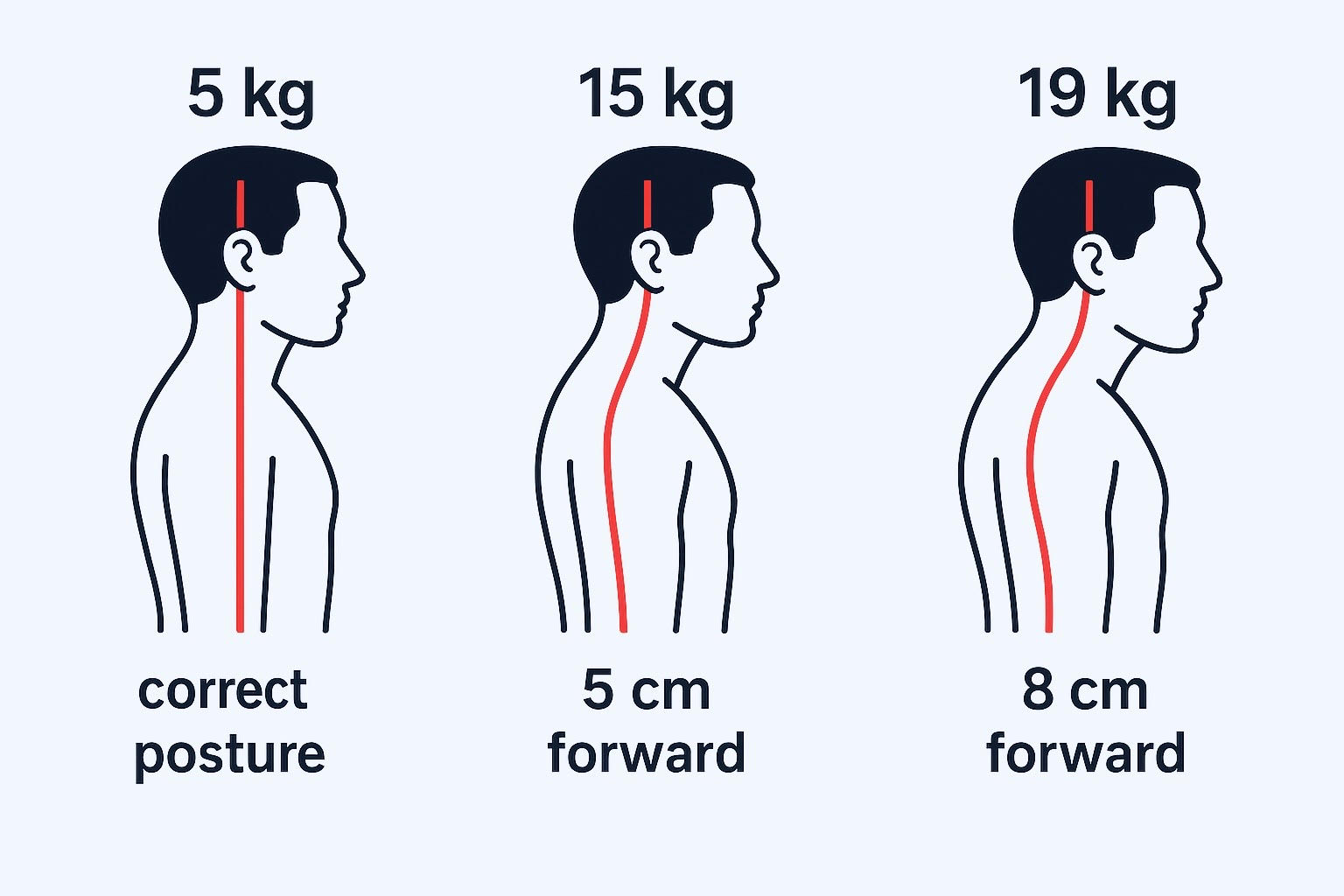
An unbalanced distribution of forces in the head-mandible-neck complex causes the body to adopt compensatory strategies to offset these overloads. The problem, however, is that compensatory strategies become “worn out,” and will therefore cause discomfort and develop various diseases in the future. It is therefore crucial to achieve a reference position in which the balance of the head-neck-mandible system ensures optimal, proper functioning of the system without causing the development of pathologies.
The importance of head position
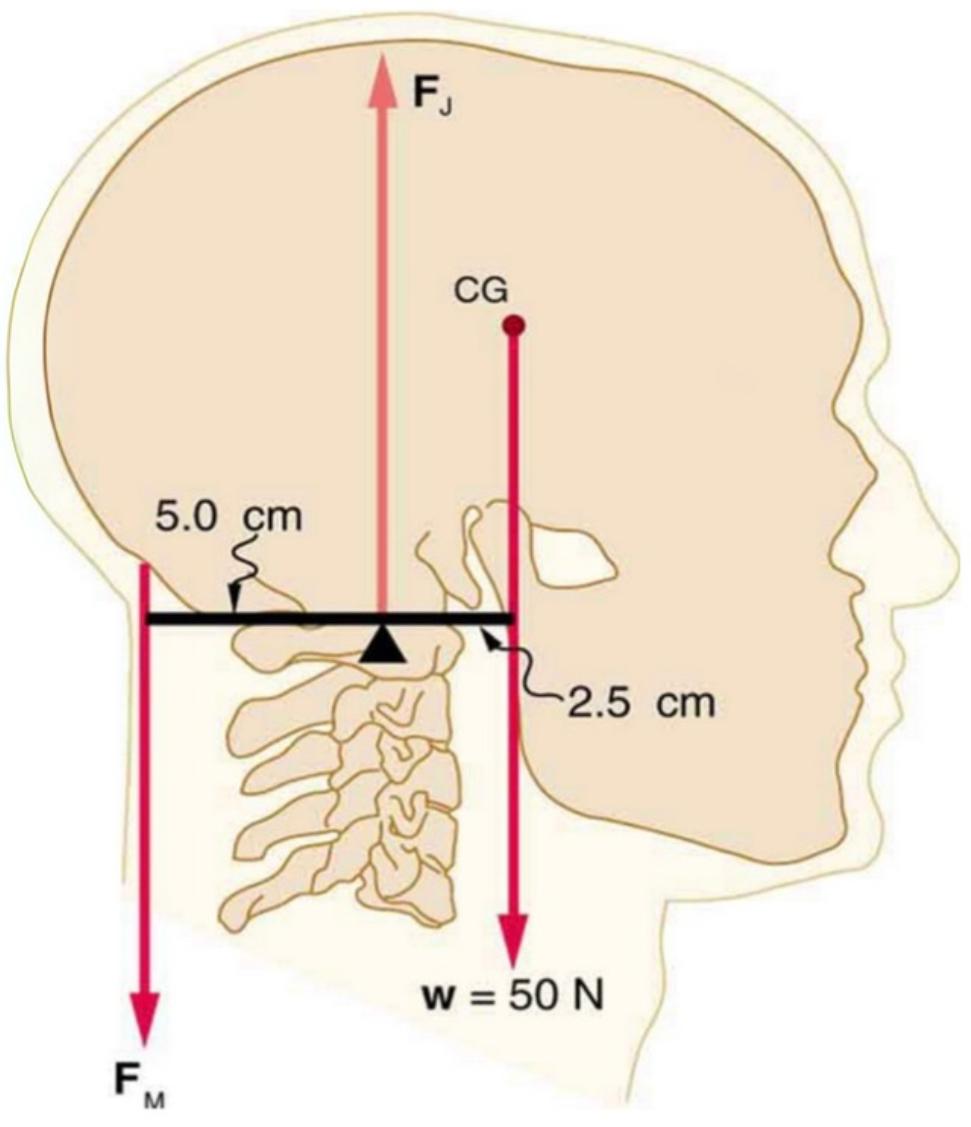
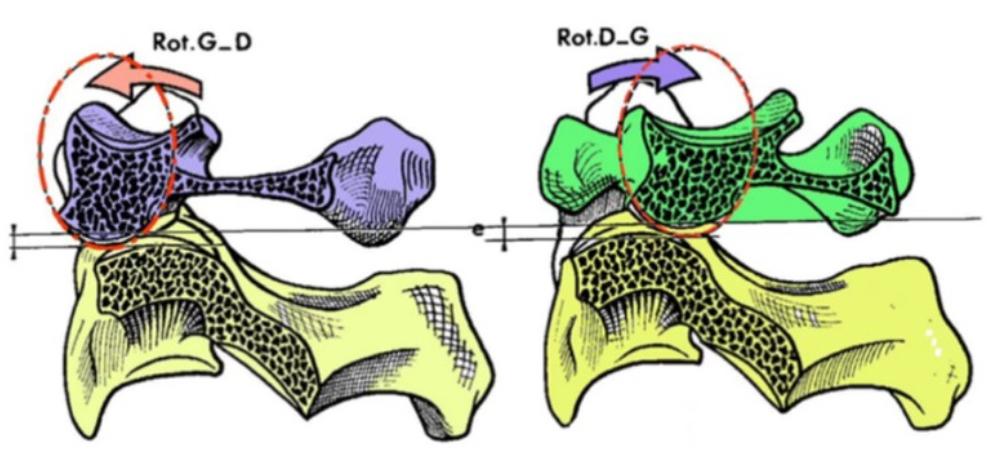
The correct projection of the center of gravity in the skull allows for full movement of the head and cervical spine. This occurs during spinal rotation, known as the screw-down phenomenon, i.e., the lowering of the atlas relative to the axis in a screw-like motion. This maintains constant tension that controls and regulates the membranes and ligaments in this region. The shape of the joint surfaces and this tension allow for full range of motion without overloading the tissues.
Reference position and temporomandibular joints
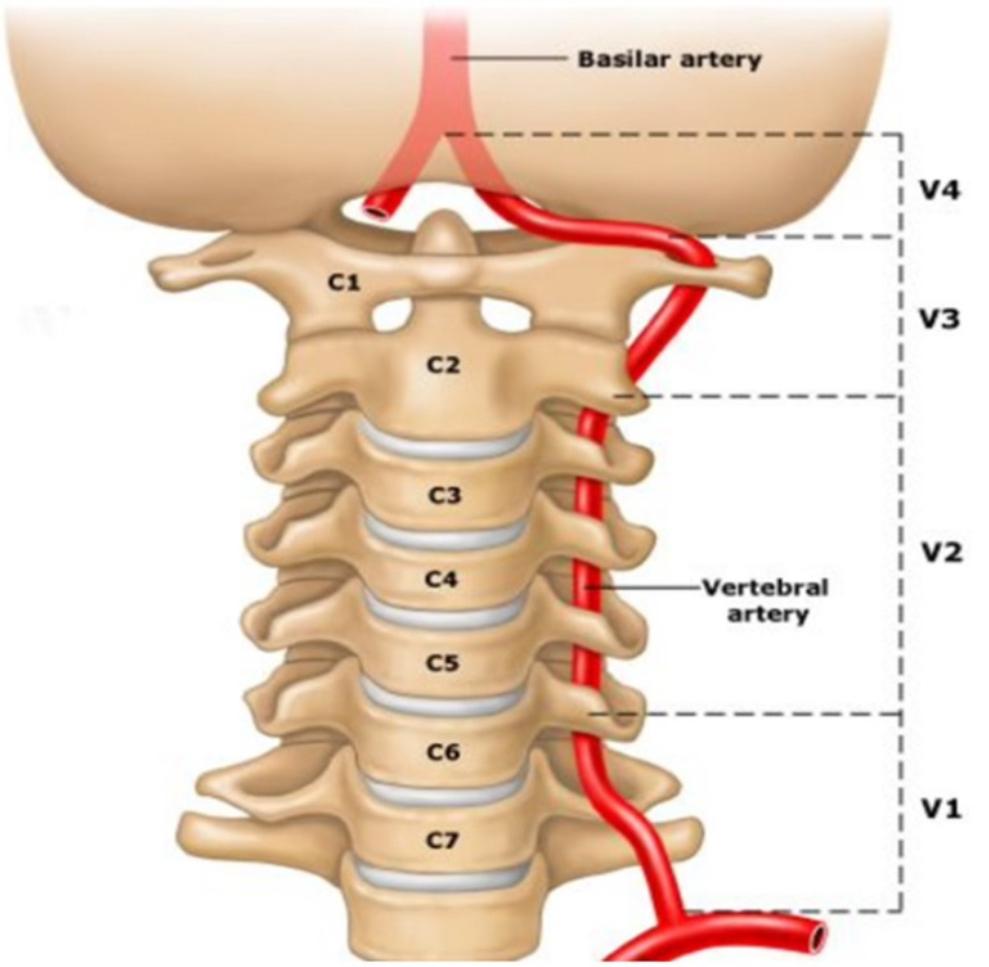
Under optimal conditions (reference position of the head), normal biomechanical movement occurs in the temporomandibular joints, which is then symmetrical, repeatable in terms of quality, and maximum for a given person. The full range of mandibular abduction is 50-60 mm, with 50% of this movement being rotation of the condyle around the disc and the other 50% being displacement of the condyle and articular disc. This is facilitated by the correct distribution of forces and the work of the tongue, which lies flat on the upper palate in 2/3 of the case with the teeth out of contact. Negative pressure is maintained between the tongue and the palate in a space called Donders’ space.Reference position, blood vessels, and airways
Literature
1. The relationship between forward head posture, postural control and gait: A systematic review
2022 Oct;98:316-329.
doi: 10.1016/j.gaitpost.2022.10.008., Guohao Lin 1, Xiong Zhao 2, Weijie Wang 3, Tracey Wilkinson 4
2. Combining targeted instrument-assisted soft tissue mobilization applications and neuromuscular exercises can correct forward head posture and improve the functionality of patients with mechanical neck pain: a randomized control study
2021 Feb 21;22(1):212.
doi: 10.1186/s12891-021-04080-4., Konstantinos Mylonas 1, Pavlos Angelopoulos 1, Evdokia Billis 1, Elias Tsepis 1, Konstantinos Fousekis 2
3. Upper cervical and upper thoracic spine mobilization versus deep cervical flexors exercise in individuals with forward head posture: A randomized clinical trial investigating their effectiveness
2019;32(4):595-602.
doi: 10.3233/BMR-181228.Juchul Cho 1 2, Eunsang Lee 1, Seungwon Lee 3
4. Effect of Forward Head Posture on Dynamic Balance Based on the Biodex Balance System
2022 Oct 1;12(5):543-548.doi: 10.31661/jbpe.v0i0.1912-1036Alireza Ahmadipoor 1, Khosro Khademi-Kalantari 1, Asghar Rezasoltani 2, Sedigheh-Sadat Naimi 2, Alireza Akbarzadeh-Baghban 2
5. Characteristics of cervical position sense in subjects with forward head posture
2014 Nov;26(11):1741-3.
doi: 10.1589/jpts.26.1741.Mi-Young Lee 1, Hae-Yong Lee 2, Min-Sik Yong 2
6. Influence of Forward Head Posture on Cervicocephalic Kinesthesia and Electromyographic Activity of Neck Musculature in Asymptomatic Individuals
2020 Dec;19(4):230-240.
doi: 10.1016/j.jcm.2020.07.002Arzoo Khan 1, Zainy Khan 1, Pooja Bhati 2, M Ejaz Hussain 2
7. Neck kinematics and sternocleidomastoid muscle activation during neck rotation in subjects with forward head posture
2015 Nov;27(11):3425-8.
doi: 10.1589/jpts.27.3425Man-Sig Kim 1
8. Comparison of cervical muscle thickness between asymptomatic women with and without forward head posture
2017 May-Jun;21(3):206-211.
doi: 10.1016/j.bjpt.2017.04.003Fateme Bokaee 1, Asghar Rezasoltani 2, Farideh D Manshadi 3, Sedigheh S Naimi 3, Alireza A Baghban 4, Hadi Azimi 5
9. The effect of forward head posture on muscle activity during neck protraction and retraction
2015 Mar;27(3):977-9.
doi: 10.1589/jpts.27.977Kyeong-Jin Lee 1, Hee-Young Han 1, Song-Hee Cheon 1, So-Hyun Park 1, Min-Sik Yong 1
10. The impact of forward head posture on the electromyographic activity of the spinal muscles
2020 Dec 16;16(2):224-230.
doi: 10.1016/j Zaenab Alowa 1, Walaa Elsayed 2
11. The Relationship Between Forward Head Posture and Neck Pain: a Systematic Review and Meta-Analysis
2019 Dec;12(4):562-577.
doi: 10.1007/s12178-019-09594-y.Nesreen Fawzy Mahmoud 1, Karima A Hassan 2, Salwa F Abdelmajeed 2, Ibraheem M Moustafa 3, Anabela G Silva 4
12. Effect of 4 Weeks of Cervical Deep Muscle Flexion Exercise on Headache and Sleep Disorder in Patients with Tension Headache and Forward Head Posture
2021 Mar 25;18(7):3410.
doi: 10.3390/ijerph18073410.Wonho Choi 1
13. Impact of Cervical Sensory Feedback for Forward Head Posture on Headache Severity and Physiological Factors in Patients with Tension-type Headache: A Randomized, Single-Blind, Controlled Trial
2019 Dec 15;25:9572-9584.
doi: 10.12659/MSM.918595.Eunsang Lee 1, Seungwon Lee 2
14. Forward head posture: its structural and functional influence on the stomatognathic system, a conceptual study
1996 Jan;14(1):71-80.
doi: 10.1080/08869634.1996.11745952.H E Gonzalez, A Manns
15. Global Body Posture Evaluation in Patients with Temporomandibular Joint Disorder
2009 Jan; 64(1): 35–39.
doi: 10.1590/S1807-59322009000100007
Eliza Tiemi Saito, Paula Marie Hanai Akashi, and Isabel de Camargo Neves Sacco
16. The relationship between forward head posture and temporomandibular disorders
W Y Lee 1, J P Okeson, J Lindroth
17. Influence of forward head posture on muscle activation pattern of the trapezius pars descendens muscle in young adults
2022 Nov 14;12(1):19484.
doi: 10.1038/s41598-022-24095-8Yuichi Nishikawa 1, Kohei Watanabe 2, Takanori Chihara 3, Jiro Sakamoto 4, Toshihiko Komatsuzaki 3, Kenji Kawano 5, Akira Kobayashi 5, Kazumi Inoue 5, Noriaki Maeda 6, Shinobu Tanaka 3, Allison Hyngstrom 7
18. Head flexion angle while using a smartphone
2015;58(2):220-6.
doi: 10.1080/00140139.2014.967311Sojeong Lee 1, Hwayeong Kang, Gwanseob Shin
19. Effect of neck flexion angles on neck muscle activity among smartphone users with and without neck pain
2019 Dec;62(12):1524-1533.
doi: 10.1080/00140139.2019.1661525.Suwalee Namwongsa 1 2, Rungthip Puntumetakul 1 2, Manida Swangnetr Neubert 1 3, Rose Boucaut 4
20. Musculoskeletal disorder and pain associated with smartphone use: A systematic review of biomechanical evidence
2018 Dec;38(2):77-90.
doi: 10.1142/S1013702518300010Aitthanatt Chachris Eitivipart 1 2, Sirinya Viriyarojanakul 3, Lucy Redhead
21. Head forward flexion, lateral bending and viewing distance in smartphone users: A comparison between sitting and standing postures
2020;67(4):837-846.
doi: 10.3233/WOR-203303Zahra Vahedi 1, Adel Mazloumi 1 2, Ali Sharifnezhad 3, Zeinab Kazemi 1, Ehsan Garosi 1
22. Effects of smartphone screen viewing duration and body position on head and neck posture in elementary school children
2022;35(1):185-193.
doi: 10.3233/BMR-200334.Amr Almaz Abdel-Aziem 1 2, Mohamed Abdel-Fattah Abdel-Ghafar 3, Olfat Ibrahim Ali 4, Osama Ragaa Abdelraouf 2
23. Is forward head posture relevant to autonomic nervous system function and cervical sensorimotor control? Cross sectional study
2020 Mar;77:29-35.
doi: 10.1016/j.gaitpost.2020.01.004Ibrahim M Moustafa 1, Ahmed Youssef 2, Amal Ahbouch 3, May Tamim 3, Deed E Harrison 4
24. THE IMPACT OF THE POSITION OF THE HEAD ON THE FUNCTIONING OF THE HUMAN BODY: A SYSTEMATIC REVIEW
ELŻBIETA SZCZYGIEŁ, NATALIA FUDACZ, JOANNA GOLEC, and EDWARD GOLEC
2020;33(5):559–568 https://doi.org/10.13075/ijomeh.1896.01585
25. Effect of forward head posture on thoracic shape and respiratory function
2019 Jan;31(1):63-68.
doi: 10.1589/jpts.31.63Taiichi Koseki 1 2, Fujiyasu Kakizaki 3, Shogo Hayashi 4, Naoya Nishida 1 5, Masahiro Itoh 1
26. Head eye co-ordination and gaze stability in subjects with persistent whiplash associated disorders
2011 Jun;16(3):252-7.
doi: 10.1016/j.math.2010.11.002.Julia Treleaven 1, Gwendolen Jull, Helena Grip
27. Sensorimotor disturbances in neck disorders affecting postural stability, head and eye movement control
2008 Feb;13(1):2-11.
doi: 10.1016/j.math.2007.06.003Julia Treleaven
28. Journal of Human Physiology, July 2021 https://ojs.bilpublishing.com/index.php/jhp
Piotr Godek, Michał Guzek, Jakub Przychodzeń
29. Automatic Detection and Reproduction of Natural Head Position in Stereo-Photogrammetry
June 30, 2015
Tai-Chiu Hsung*, John Lo, Tik-Shun Li, Lim-Kwong Cheung,
. doi:10.1371/journal. pone.0130877
30. Fotogrametria cyfrowa w zastosowaniach medycznych do pomiaru ciała ludzkiego – przegląd i tendencje rozwojowe systemów pomiarowych.
Regina Tokarczyk, Akademia Górniczo-Hutnicza w Krakowie, Al. Mickiewicza 30, 30-059 Kraków